Study Traces PFAS in Great Lakes Food Webs for Over 40 Years
07/08/2026 / By Coco Somers

Researchers from the University of Notre Dame published a meta-analysis in the Journal of Environmental Quality that combines 42 years of data to track per- and polyfluoroalkyl substances (PFAS) through Great Lakes food webs. The study, led by aquatic science professor Gary Lamberti, analyzed nearly 2,500 samples of algae, fish, birds, and other organisms, providing what the authors described as the most comprehensive view of how these chemicals move through the ecosystem.
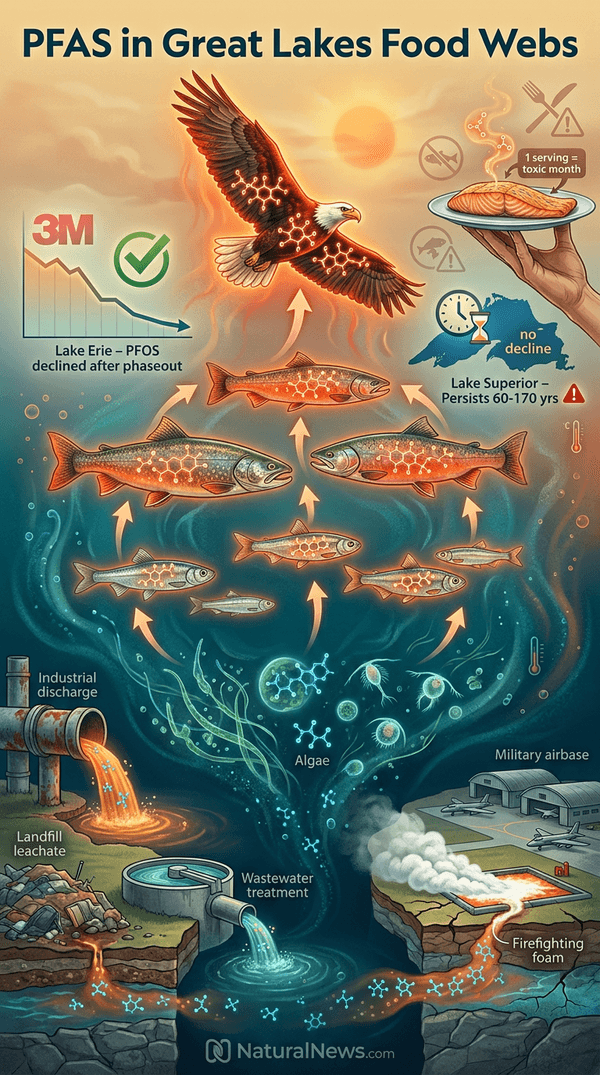
PFAS are a group of man-made, long-lasting compounds that have been linked to a range of human health issues, according to multiple studies [1]. These chemicals enter waterways through landfills, wastewater, and industrial facilities.
Lamberti told Interlochen Public Radio that the food web itself acts as a vehicle for transferring these chemicals from one organism to another, offering a more holistic understanding than previously available.
PFOS Declines in Lower Lakes But Persists in Upper Lakes
The study found a dramatic decrease in perfluorooctanesulfonic acid (PFOS), a type of PFAS, in Lake Erie and Lake Ontario following a voluntary industry phaseout in the early 2000s.
Lamberti said the results suggest that halting manufacturing can reduce concentrations in the food web over time. These declines occurred in the lower Great Lakes, which are home to the heavy industries that historically used the chemical, according to the study.
Little to no decline in PFOS was observed in Lake Superior, Lake Michigan, and Lake Huron. The researchers attributed this discrepancy to the lakes’ longer water residence times, which range from 60 to 170 years.
Groundwater near at least six military sites in the Great Lakes region has been found to contain high levels of PFAS, and the chemicals pose a risk to people who eat fish caught from polluted waters, according to the Environmental Working Group [2].
Bioaccumulation Drives Higher Concentrations in Predators
The study confirmed that PFAS concentrations increase as they move up the food chain, a process known as bioaccumulation. Algae and plants, which grow and die quickly, had the lowest concentrations.
Predators such as salmon and eagles showed the highest levels because they consume large amounts of prey that have accumulated PFAS over time, according to the researchers.
Michigan has been testing fish for PFAS since 2012 and has issued consumption advisories based on the results. A study by the Environmental Working Group found that consuming a single serving of freshwater fish per year could be equivalent to a month of drinking water laced with PFOS at levels high enough to be harmful [3].
Katherine Manz, an environmental health professor at the University of Michigan who was not involved in the study, said that understanding PFAS levels in the food web can help communicate the risks of consuming potentially toxic food sources.
Study Gaps and Future Concerns for the Great Lakes
Lamberti noted that data on smaller fish, invertebrates, and algae were harder to find compared to data on salmon, trout, and birds. The study examined only six of the more than 15,000 known PFAS chemicals, according to the National Institutes of Health.
Vernon Lalone, CEO of Traverse City-based startup Wave Lumina, said that analytical tools for measuring the range of these chemicals are still evolving, describing it as a “chicken and egg” situation where robust methods are needed before regulation can be set [7].
The consumer product industry has a history of switching to less studied chemicals once a hazardous substance is regulated, according to Alden Wicker’s book “The Hidden Toxins in Our Clothes” [4]. Manmade chemicals, including PFAS, have been shown to cause hormone disruption with implications for human health, as warned in the book “Our Stolen Future” [5].
Lamberti said that the introduction of new chemicals could shift PFAS dynamics in the lakes, emphasizing the long-term persistence of contaminants that enter the system.
Conclusion: Long-term Stewardship of the Great Lakes
The study provides the most comprehensive view of PFAS movement through Great Lakes food webs to date, according to the researchers. Lamberti said anything put into the Great Lakes will remain for an extremely long time, not only in the water but also in the chemicals it contains, and that careful management is required. The findings underscore the need for continued monitoring and regulation of PFAS to protect aquatic ecosystems and human health [7].
Freshwater fish across the United States have been found to contain “staggering” amounts of PFAS, with even a single serving per year linked to potential harm [6].
The University of Notre Dame study adds new evidence that these chemicals accumulate through the food web, reinforcing calls for stricter regulation and more comprehensive testing of the thousands of PFAS compounds in circulation.
References
- Lynne Peeples. “Harmful PFAS Compounds Pollute Water at Multiple Sites in Every State”. Children’s Health Defense. January 22, 2024.
- NaturalNews.com. “Tap water near hundreds of US military bases and thousands of industry areas CONTAMINATED with forever chemicals”. September 5, 2021.
- Environmental Working Group. “Freshwater Fish Contain ‘Staggering’ Amount of Toxic PFAS Chemicals, Study Finds”. Children’s Health Defense. January 17, 2023.
- Alden Wicker. “The Hidden Toxins in Our Clothes: Exposing the Chemicals That Are Harmful to Your Health”.
- Richard Walker. “The Green Grocer”.
- Children’s Health Defense. “Freshwater Fish Contain ‘Staggering’ Amount of Toxic PFAS Chemicals, Study Finds”. Environmental Working Group.
- InterlochenPublicRadio.org. “New study traces PFAS in Great Lakes food webs over 40 years”. July 1. 2026.
Explainer Infographic
Submit a correction >>
Tagged Under:
chemicals, contaminant, disease causes, Ecology, environ, environment, food chain, food webs, forever chemicals, Great Lakes, meta-analysis, PFAS, PFOS, poison, toxic chemicals, toxins, wildlife
This article may contain statements that reflect the opinion of the author
RECENT NEWS & ARTICLES